The Silent Epidemic: How Daily Earbud Use Is Impacting Hearing Health
Wireless earbuds have become an indispensable part of daily life— accompanying commutes, workout sessions, endless work calls, and late-night streaming. However, fitting powerful acoustic drivers directly inside the ear canal has introduced unprecedented acoustic stress to human hearing, triggering a subtle yet widespread rise in noise-induced hearing loss (NIHL) among younger demographics.
1. The Physics of In-Ear Sound Delivery
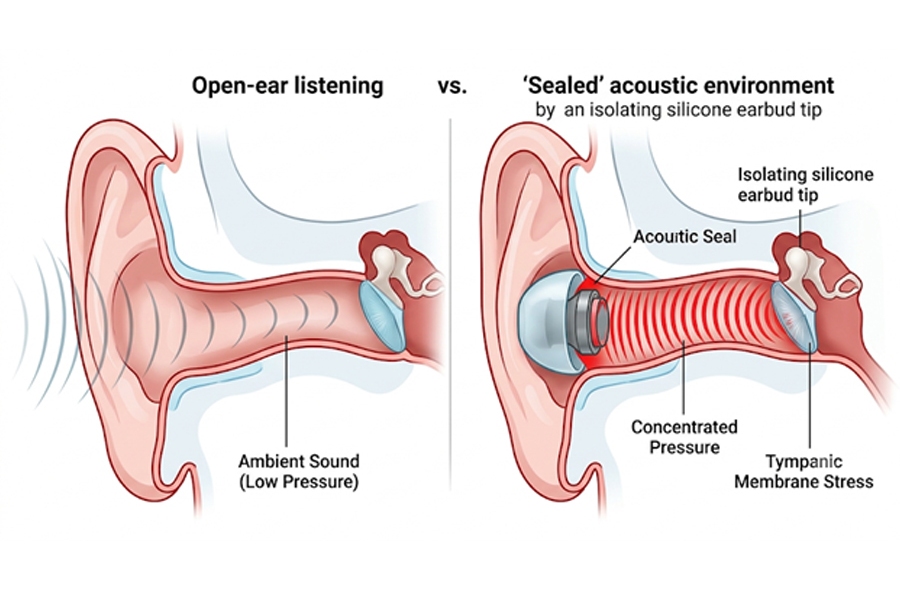
The primary danger of earbuds stems from proximity rather than just volume settings. Traditional speakers deliver sound waves that travel through air, naturally dissipating energy before reaching the eardrum. Over-ear headphones sit outside the pinna, allowing a small buffer of air volume.
In contrast, silicone or plastic earbud tips seal off the ear canal, creating a closed acoustic chamber. This physical isolation concentrates sound pressure waves directly against the tympanic membrane (eardrum), amplifying the effective acoustic force by up to 6 to 9 decibels compared to ambient sound at equivalent output settings.
2. Recognizing When Volts Become Violations
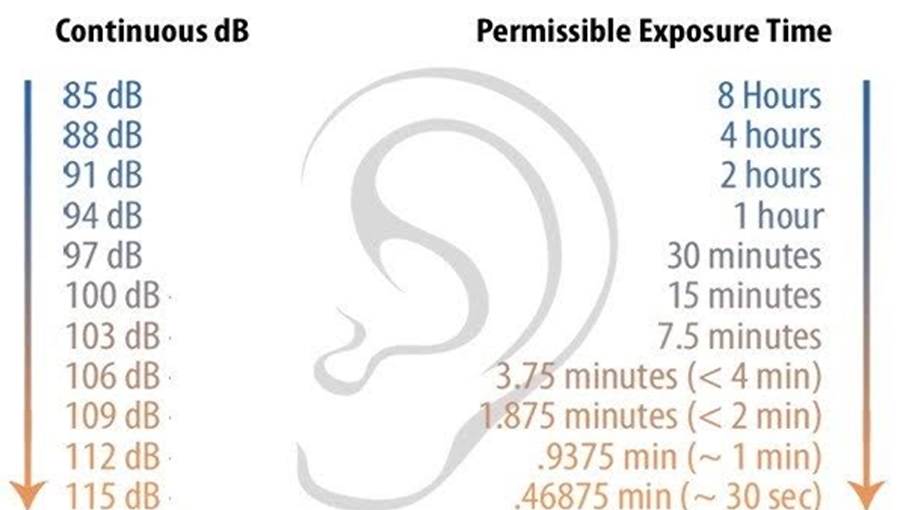
A standard safety chart tells us what is dangerous, but the challenge is recognizing that danger in daily context. We need to see how modern, seemingly benign activities push us past those limits. Ear fatigue is often the first warning sign. It's that subtle, dull ache or localized tiredness in the ear canal that signals metabolic stress. But how loud are our daily environments before we even turn on the music?
3. How Hair Cells in the Cochlea Suffer Damage
Inside the inner ear lies the cochlea, a fluid-filled, snail-shaped structure lined with tens of thousands of microscopic sensory receptors called stereocilia (hair cells). These hair cells bend in response to sound vibrations, converting mechanical energy into electrical signals that the auditory nerve routes to the brain.
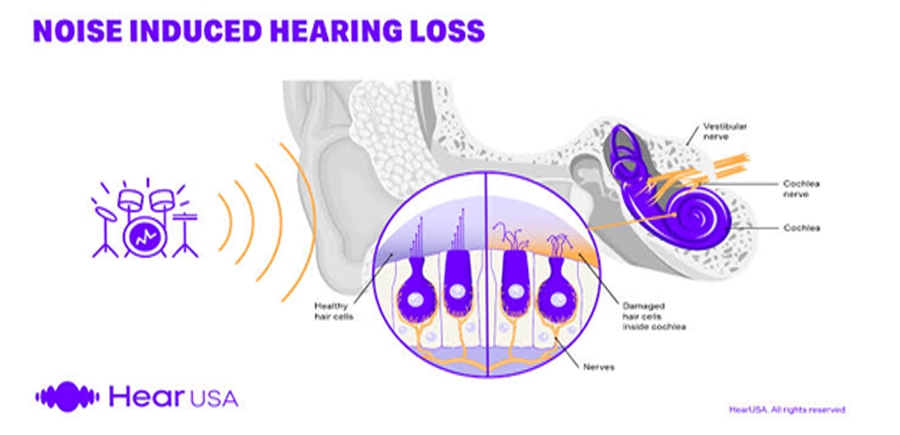
When exposed to high decibel levels, particularly above 85 dB, the following may occur:
- Over-stimulation: Acoustic pressure forces the hair cells to vibrate excessively.
- Metabolic Fatigue: The cells consume energy rapidly to manage intense mechanical vibration.
- Irreversible Cell Death: Unlike skin or muscle cells, human inner-ear hair cells do not regenerate once destroyed.
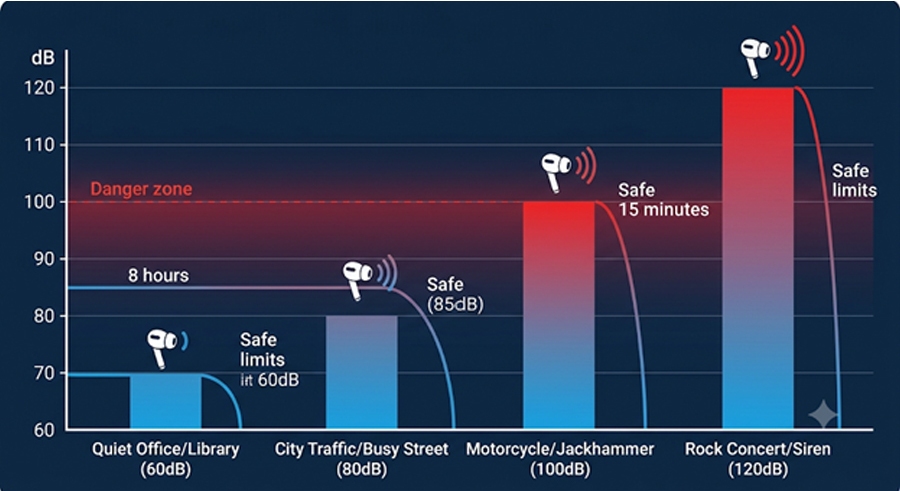
4. Recognizing Early Warning Signs
Noise-induced hearing damage rarely happens overnight. It accumulates over months and years. Watch out for these early signs of auditory strain:
- Tinnitus: Persistent ringing, buzzing, or high-pitched humming in one or both ears after removing earbuds.
- Muffled Hearing: Feeling as though your ears are plugged or sound is coming through cotton.
- Difficulty Understanding Speech: Struggling to distinguish consonant sounds in crowded environments.
- Ear Fatigue and Pressure: Physical discomfort or dull aching in the ear canal after prolonged use.
5. Muffled Hearing
To understand TTS, visualize the cochlea's frequency map being compromised. A healthy ear hears crisp detail. An ear experiencing TTS perceives sound as if filtering it through water or cotton. This perception is often localized to high-frequency sounds first—making speech (especially consonants like 's' or 'f') sound indistinct, even if the overall volume seems loud.
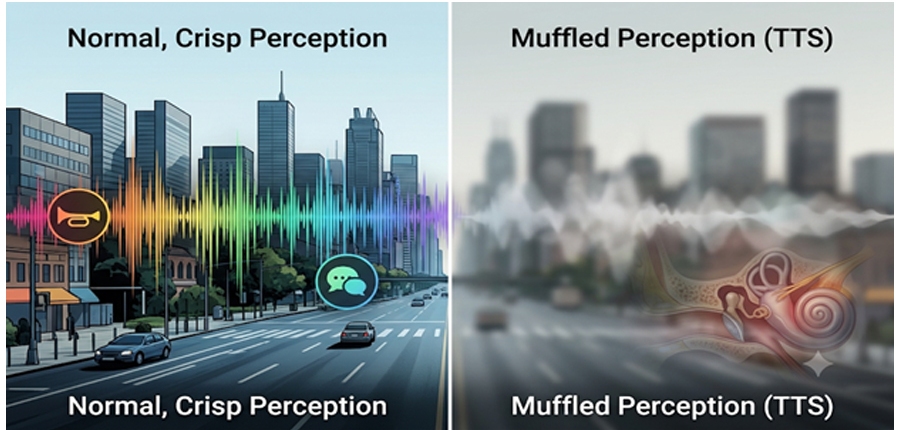
Left shows "Normal, Crisp Perception" with defined edges and sharp, detailed sounds. Right simulates "Muffled Perception (TTS)" after excessive earbud use.
6. Secondary Risks Beyond Hearing Loss
Prolonged daily use of tight-fitting earbuds carries additional non-auditory hygiene risks.
- Earwax Impaction: Pushing earbuds into the canal may compress earwax toward the eardrum, leading to blockages, earache, and temporary hearing reduction.
- Bacterial and Fungal Infections: Sealing the canal traps moisture and heat, creating an environment where bacteria and fungi can grow, potentially causing outer ear infections.
7. The 4 Rules for Safe Daily Earbud Usage
| Practice | Safety Standard | Benefit |
|---|---|---|
| 60/60 Rule | Listen at a maximum of 60% volume for no more than 60 minutes at a stretch. | Encourages lower-volume listening and regular breaks. |
| Active Noise Cancellation | Enable ANC in noisy environments such as trains, traffic, and gyms. | Reduces the urge to increase volume. |
| Over-Ear Headphones | Consider over-ear headphones for long calls and desk work. | Can improve comfort during extended use. |
| Regular Cleaning | Clean earbuds and silicone tips regularly according to the manufacturer's instructions. | Reduces dirt and bacterial build-up. |
By practicing volume awareness and allowing your ears structured rest periods, you can enjoy wireless audio while reducing the risk to your long-term hearing health.
8. Hygiene and the Hidden Risks of Bacterial Build-up
Beyond acoustic trauma, earbuds present physical hygiene risks. A tight-fitting silicone tip doesn't just block sound; it also seals in moisture, heat, and naturally occurring earwax (cerumen).
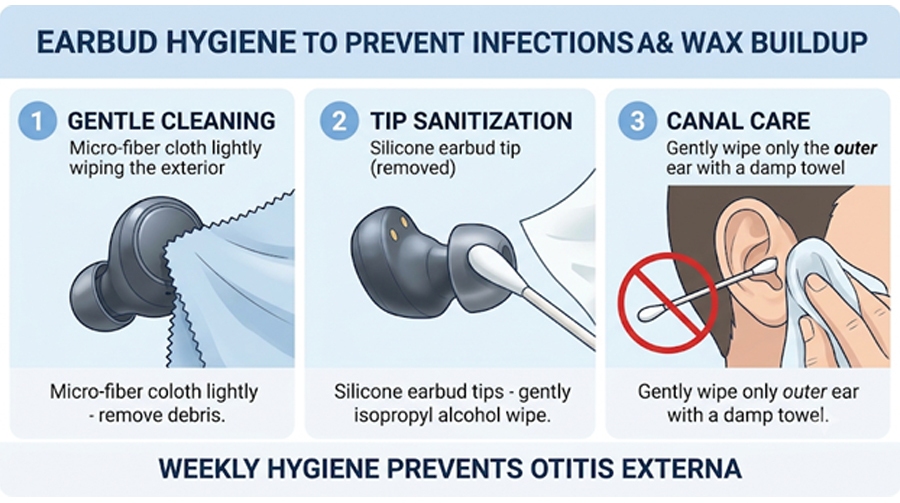
Prolonged use of earbuds can lead to:
- Cerumen Impaction: Earwax may become compressed inside the ear canal, leading to blockages.
- Otitis Externa (Swimmer's Ear): Trapped moisture creates an environment where bacteria or fungi may thrive, potentially causing painful external ear infections.
A key prevention strategy is regular sanitation and keeping earbuds clean and dry.
AudiZone Speech & Hearing Clinic in India operates through its 16 branches across 3 states of Odisha, Jharkhand and Chhattisgarh in cities like Bhubaneswar, Cuttack, Brahmapur, Balasore, Koraput, Rourkela, Sambalpur, Keonjhar, Jamshedpur, Durg, Bilaspur, and Raipur. Audizone has a team of over 100 highly qualified audiologists who have till date successfully treated over 1 lakhs patient’s including kids and adults for hearing and speech related issues. AudiZone provides various types of branded hearing aids such as Signia, Phonak, Widex, ReSound, Starkey, and Oticon to patients based on their preference and requirement.