Hearing Protection
- Home
- Hearing Protection
”blindness separates people from things, but deafness separates people from people.”
We live in the noisy world. Many of us work in the noisy places. Few of us have noisy hobbies such as hunting, or perhaps we do a lot of working with the power tools. Often, we do not recognize the damage that some of these noises can do to our hearing.
Did you know that extreme noise exposure is one of the most common causes of the hearing loss? And, there are also different other forms of the hearing loss. Noise pollution can be prevented by taking few simple precautions.
The speed of hearing damage is based on the intensity (loudness) level of the sound, how long you have exposed to the sound & how frequently exposure occurs.
If sounds seem stifled, or you notice the ringing in your ears after noise disclosure, this is a symbol that your ears have exposed to the sound that is too loud. You can be experiencing the short threshold shift of your hearing. With reiterated exposure to loud sounds, this can become the permanent hearing loss.
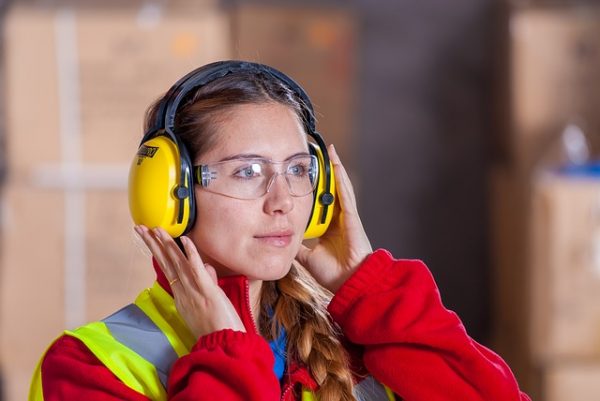
Use the hearing protection when revealed to loud noise. Earplugs are simple to use & inexpensive. They can be purchase at almost any drugstore. It is a little amount to pay for the lifetime of better hearing.
Custom-made hearing protective devices may also be procured through a certified Audiologist. If you are musician or you attend various concerts, musician’s earplugs are possible. Special earplugs can be made for the hunters, motorcycle enthusiasts or for daily usage. It is a must for persons working in industrial setups. Also, remember to turn down the volume on televisions, radios, & personal stereos.
Our Services We Offer
HEARING PROTECTION
Hearing is one of the important sense organ out of the five senses. Once Hellen Keller was asked what would you prefer to be
HEARING AIDS
Hearing Aid in simple terms is an amplifying device. Hearing aids are the trusted companions for the deaf. Perhaps you have thought.
SPEECH THERAPY
The Department of Speech Therapy at AUDIZONE , is a center of excellence in the study & treatment of speech and language problems.
DIAGNOSTIC CLINIC
We are fully equipped with all the diagnostic tests like , Pure tone audiometry, Impedance Audiometry, BERA, ASSA,OAE etc.
TINNITUS CLINIC
Are you suffering from a continuous ringing or buzzing sound in your ears, if yes, then probably you are suffering from tinnitus.
Why Choose Us
AUDIZONE consists of the expert doctors in their specialized area and are well experienced. Each year, AUDIZONE doctors diagnose & treat various people for various kinds of hearing abnormalities.AUDIZONE hearing experts continuously work with doctors trained in brain & nervous system tumor treatment (neuro-oncologists),
Frequently Asked Questions
A small microphone is built into a hearing aid, and this tiny gadget picks up ambient sound and transforms it to electrical energy. An electrical signal is sent to a miniature speaker called a receiver by modifying and altering circuits in the amplifier. The sound is sent to the ear by this little structure. The majority of modern hearing aid technology enhances required frequencies and reduces noise for a different type of hearing loss.
Ready to Book Your Appointment?
Contact us today to schedule your visit and take the first step toward a healthier speech and hearing.