Know About Hearing Loss Caused By Infection & How To Prevent It
Hearing loss caused by infection is one of the most underrecognized causes of auditory damage, yet it is also one of the most preventable. While many people associate hearing loss with aging or exposure to loud noises; viral and bacterial infections can directly target the sensitive structures of the outer, middle, and inner ear; sometimes leaving behind temporary muffling, and in certain cases, permanently damaging your hearing capability. Understanding how infections affect your hearing is important, as it helps in taking proactive steps to protect your ear can save your hearing for a lifetime.
How Infections Target Your Ears
To understand how an infection impairs hearing, it helps to see where the damage happens. Your ear is divided into three main sections:
- the outer ear;
- the middle ear;
- the inner ear
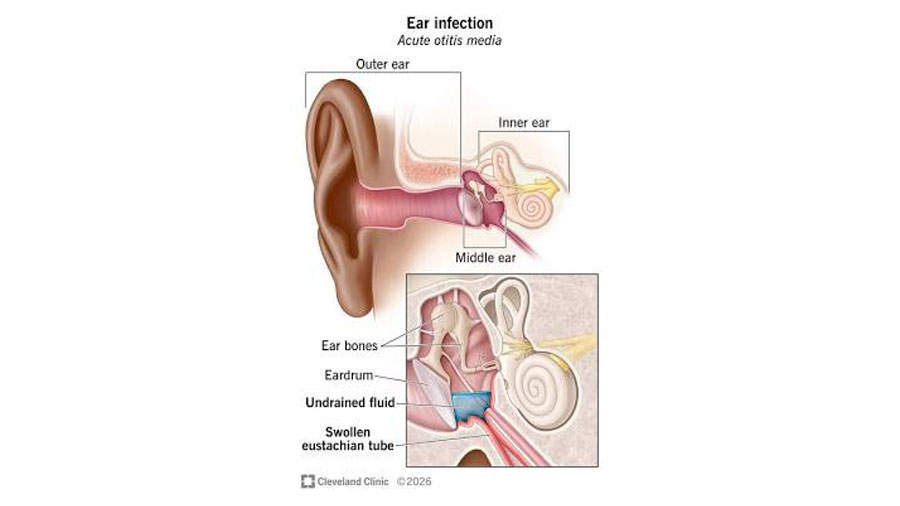
How fluid buildup in the middle ear blocks sound transmission. Source: Cleveland Clinic
Depending on which part of your ear the infection strikes, your hearing loss can usually be categorised into two types, namely: -
1. Conductive Hearing Loss (Middle & Outer Ear)
When fluid, pus, or swelling blocks sound waves from traveling through the ear canal to the eardrum and tiny ear bones (ossicles), sound becomes muffled or faint.
- Mechanism: - Fluid traps behind the eardrum due to a swollen Eustachian tube.
- Prognosis: - Usually temporary and resolves once the infection clears and fluid drains.
2. Sensorineural Hearing Loss (Inner Ear & Auditory Nerve)
When virus or bacteria penetrate the inner ear (cochlea) or damage the delicate hair cells and auditory nerve fibers, the brain stops receiving clear sound signals.
- Mechanism: - Inflammation, viral toxins, or reduced blood flow destroys sensory hair cells that can’t be regenerated.
- Prognosis: - Often permanent and may require hearing aids or cochlear implants if not treated immediately upon detection.
Infections Commonly Linked to Hearing Loss
| Infection Type | Primary Affected Area | Hearing Loss Type | Severity & Permanence |
|---|---|---|---|
| Otitis Media (Middle Ear Infection) | Middle ear | Conductive | Usually temporary; but can cause permanent damage if chronic or if eardrum ruptures[cite: 1] |
| Labyrinthitis / Neuritis | Inner ear & auditory nerve | Sensorineural | Can be permanent if untreated; often accompanied by severe vertigo[cite: 1] |
| Bacterial Meningitis | Inner ear / Auditory pathways | Sensorineural | Severe and often permanent; can cause ossification (hardening) of the cochlea[cite: 1] |
| Viral Illnesses (Measles, Mumps, CMV) | Inner ear hair cells | Sensorineural | Mild to severe single- or double-ear permanent hearing loss[cite: 1] |
| Ramsay Hunt Syndrome (Shingles) | Auditory and facial nerves | Sensorineural | Potentially permanent hearing loss and facial paralysis without early antiviral care[cite: 1] |
Infection Symptoms & When to Seek Medical Help
An ordinary earache is common, but certain symptoms may suggest an infection is threatening your auditory system. It is best to seek immediate medical attention if you experience the following: -
- Sudden drop in hearing in one or both ears (a medical emergency known as Sudden Sensorineural Hearing Loss or SNHL).
- Severe dizziness, vertigo, or loss of balance alongside regular ear pain.
- Ringing or buzzing in the ears (Tinnitus) that comes on suddenly with a virus.
- Fluid or pus draining from the ear canal.
- High fever, stiff neck, or intense headache accompanied by ear pain (possible signs of meningitis)[cite: 1].
How to Prevent Infection-Related Hearing Loss
Preventing hearing loss resulting from infection involves two main goals: stopping infections before they start and treating infections aggressively when they occur.
1. Keep Up with Routine Vaccinations
\Vaccines are one of the most effective shields against any type of infection that can cause permanent hearing loss. These include: -
- Pneumococcal & Hib Vaccines: They protect against bacterial meningitis and recurrent middle ear infections in young children .
- MMR (Measles, Mumps, Rubella): They help prevent viral infections that have historically caused high rates of childhood deafness .
- Annual Flu & COVID-19 Shots: They help reduce upper respiratory infections that spread to the Eustachian tubes .
2. Practice Proper Ear Hygiene (Ditch the Cotton Swabs)
- Never insert cotton swabs, keys, or hairpins into your ear canal: Inserting cotton swabs, keys, or hairpins into the ear can scratch the delicate lining, trap bacteria, or even puncture the eardrum.
- Keep ears dry after swimming or bathing: After swimming or bathing, tilt your head to let water drain, and always use a soft towel to dry out the outer ear. Note that moisture left in the ear canal creates an ideal breeding ground for "swimmer's ear" (otitis externa).
3. Treat Nasal Congestion and Colds Early
Note that upper respiratory infections can cause inflammation that blocks the Eustachian tubes, trapping fluid in the middle ear. To avoid this situation
- Use saline nasal sprays or steam inhalation during a cold to keep air pathways clear.
- Always blow your nose gently, instead of forcing air through blocked passages, as it can push infected nasal secretions straight into the Eustachian tubes.
4. Never Ignore an Active Ear Infection
- Complete any prescribed course of antibiotics or antivirals fully, even if symptoms improve early.
- If fluid remains in the middle ear for more than 3 months after an infection, consult an Ear, Nose, and Throat (ENT) specialist without fail.
- Simple procedures, like placing tiny ear tubes (tympanostomy tubes), can prevent long-term damage to the ear in children and adults.
AudiZone Speech & Hearing Clinic with its pan India presence through 16 branches and a team of over 100 highly qualified audiologists has till date successfully treated over 1 lakhs patient’s including kids and adults for hearing and speech related issues. AudiZone provides various types of branded hearing aids such as Signia, Phonak, Widex, ReSound, Starkey, and Oticon to patients based on their preferences and requirement