How Ageing And Hearing Loss Are Connected
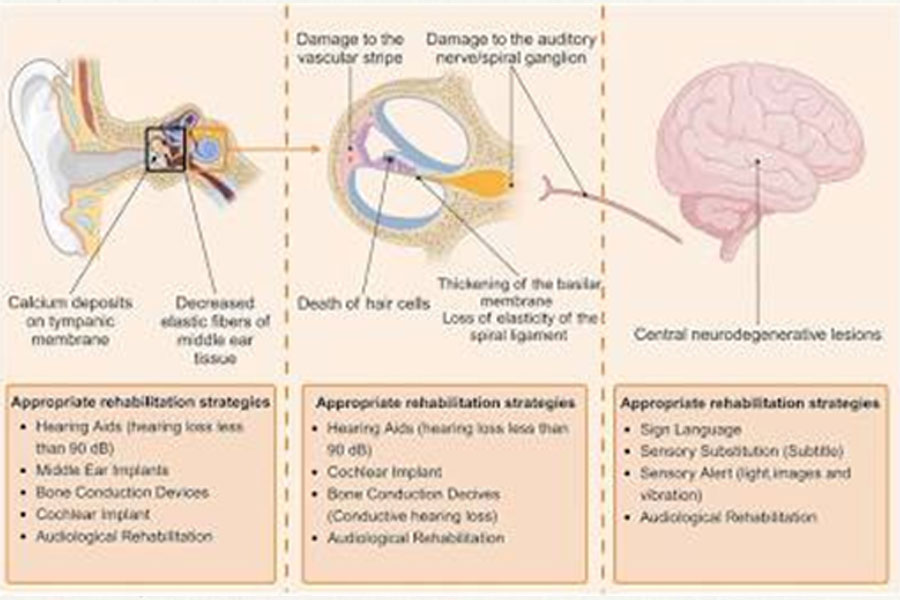
Pathology and mechanisms of presbycusis. Source: Frontiers
Age-related hearing loss, medically known as presbycusis, typically affects approximately one in three adults over the age of 65 years. Because it develops gradually over several years, many people adapt to it without even realizing how much hearing ability they have lost. Understanding how presbycusis works, recognizing its early signs, and seeking timely treatment can dramatically preserve cognitive health and quality of life.
Presbycusis varies in every person significantly, depending on which specific anatomical structures in the inner ear and auditory cortex deteriorate first. Beyond basic awareness, managing it requires understanding its clinical sub-types, diagnostic evaluations, and practical lifestyle adaptations.
Clinical Types of Presbycusis
In medical audiology, presbycusis is divided into four main physiological categories (Schuknecht's classification): -
- Sensory Presbycusis:This type is caused by the degeneration of hair cells in the basal turn of the cochlea. It results in a steep decline in high-frequency hearing, making consonants ($s$, $f$, $th$) hard to distinguish while preserving lower-pitched vowel clarity.
- Neural Presbycusis: This type involves the loss of spiral ganglion neurons and auditory nerve fibers. Its hallmark feature is phonemic regression—where speech discrimination (word understanding) drops significantly out of proportion to pure-tone threshold loss. Amplifying sound volume often yields garbled audio.
- Metabolic (Strial) Presbycusis: This type of presbycusis is caused by atrophy of the stria vascularis, which maintains the chemical composition and electrical potential of inner ear fluid. This yields a relatively flat hearing loss across all frequencies and tends to run in families (i.e. genetic).
- Mechanical (Cochlear Conductive) Presbycusis:This type of presbycusis occurs when the basilar membrane within the cochlea stiffens over time, altering physical wave movement. It presents as a gradual, sloping high-frequency loss.
What Causes Presbycusis?
Presbycusis is a form of SNHL or sensorineural hearing loss, meaning it stems from structural damage within the inner ear or the neural pathways connecting the ear to the brain. The following can cause SNHL: -
- Hair Cell Degeneration: The cochlea contains tiny sensory hair cells that converts sound vibrations into electrical signals. Over time, these delicate hair cells wear down and can’t regenerate.
- Reduced Vascular Blood Flow: Decreased blood supply to the inner ear (often linked to cardiovascular conditions or diabetes) starves the auditory nerve of oxygen and nutrients.
- Auditory Nerve Atrophy: Transmission nerves between the inner ear and the auditory cortex gradually lose efficiency, making speech processing more difficult even when sound volume is sufficient.
Early Warning Signs
As presbycusis usually affects both ears equally and begins with high-frequency sound loss, the initial symptoms are subtle: -
- Muffled Speech:Words sound increasingly slurred or low-clarity; high-pitched consonant sounds (s, th, f, sh) are hardest to distinguish.
- Difficulty in Background Noise: Struggle to follow a conversation in crowded environments like restaurants or family gatherings.
- Frequent Clarification Requests: Often asking people to repeat themselves or assuming others are constantly mumbling.
- Elevated TV/Radio Volume: Repeatedly setting audio levels of TV/Radio to significantly higher level than the levels friends or family find comfortable.
- Tinnitus: Often experiencing a persistent ringing, buzzing, or humming sound in the both ears.
Health and Cognitive Impact of Age-Related Hearing Loss
Unmanaged hearing loss as age progresses extends beyond social inconvenience; it significantly affects broader health: -
| Area of Impact | Consequence of Untreated Presbycusis |
|---|---|
| Cognitive Decline | Increased cognitive load as the brain overworks to process sound, accelerating memory and mental fatigue. Research links untreated hearing loss to a higher risk of dementia. |
| Social Isolation | Avoiding social gatherings due to communication strain, leading to feelings of loneliness or depression. |
| Safety Risks | Decreased spatial awareness and inability to hear critical cues, such as sirens, alarms, or approaching vehicles. |
Management and Modern Treatment Options
While presbycusis can’t be reversed, advanced technological interventions today offer excellent management options, such as:
- Hearing Aids: Modern digital hearing aids automatically filter background noise, boost high frequencies, and connect directly to smartphones via Bluetooth.
- Assistive Listening Devices (ALDs): Specialized TV streamers, amplified telephones, and personal FM systems enhance speech clarity in specific settings.
- Cochlear Implants: For severe or profound SNHL/sensorineural hearing loss cases where standard hearing aids are insufficient, cochlear implants bypass damaged hair cells to stimulate the auditory nerve directly.
- Auditory Rehabilitation: Brain-training exercises and speech-reading techniques help retrain the auditory cortex to process complex sounds efficiently.
Taking a baseline audiogram with an audiologist after age 50 allows for early detection of age-related hearing loss before significant social or cognitive impacts occur.
Diagnostic Process - What to Expect
A complete clinical evaluation distinguishes age-related sensorineural loss from treatable conditions like earwax impaction or middle-ear fluid. The following tests can help: -
- Otoscopy & Tympanometry: Examines the ear canal and assesses middle-ear eardrum mobility.
- Pure-Tone Audiometry: Determines the softest sounds heard across pitches (125 Hz to 8000 Hz) via air and bone conduction to confirm sensorineural patterns.
- Speech-in-Noise & Discrimination Testing: Measures word comprehension percentages in quiet vs. noisy backgrounds to assess neural clarity.
Actionable Coping Strategies / Communication Tactics
Once you are aware that you your hearing is getting progressively less with age, you can try out the following: -
- Face-to-Face Engagement: Look directly at the speaker; take visual cues and observe lip movements as these accounts for up to 30% of speech comprehension in noisy settings.
- Rephrase, Don't Just Repeat: Ask others to rephrase sentences with different words when a phrase sounds muffled; as specific consonant combinations may be hitting dead-frequency bands.
- Reduce Environmental Echo: Add soft furnishings, rugs, and curtains to living spaces to reduce sound reverberation that interferes with your hearing ability.
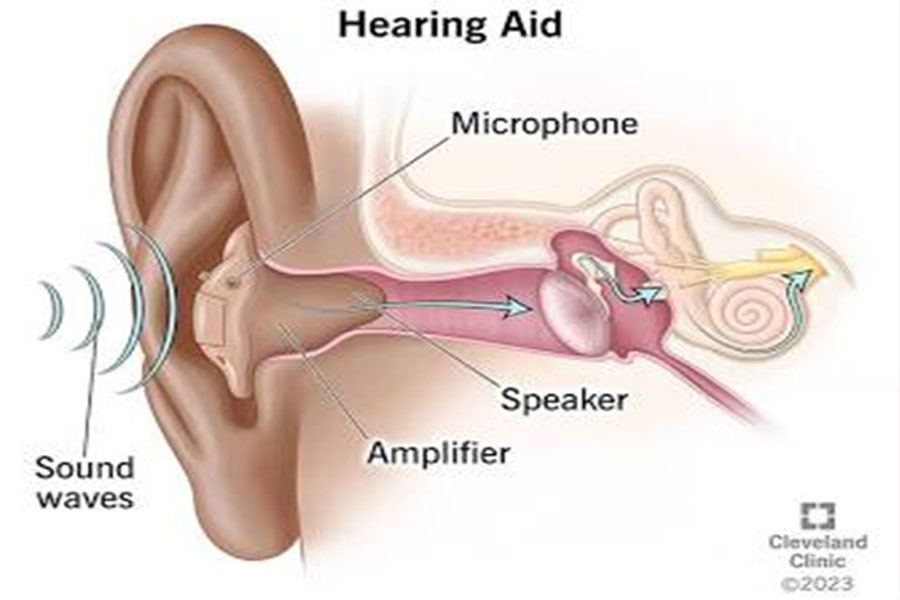
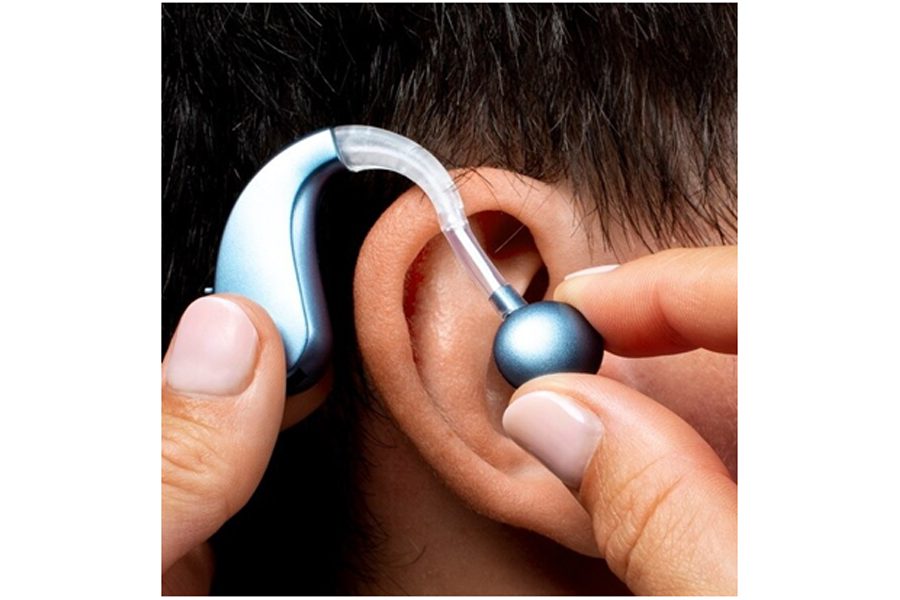
Mechanism of a hearing aid in the ear. Source: Cleveland Clinic
Hearing Aid Selection
If your hearing ability with clarity has gone down to a level difficult to manage then best idea is to opt for a hearing aid.
- Over-the-Counter (OTC) Hearing Aids: These are best suited for perceived mild-to-moderate hearing loss in greying adults without complex medical ear conditions.
- Prescription Hearing Aids: These are required for moderate-to-severe loss, severe speech-discrimination issues, or asymmetric hearing. They are custom-programmed by an audiologist using Real-Ear Measurement (REM) verification.
As you can understand from the above that age-related hearing loss is an eventual reality. It can be avoided in most cases by making yourself aware of situations like warning signs, types and taking all necessary steps to avoid it.
AudiZone Speech & Hearing Clinic with its pan India presence through 16 branches and a team of over 100 highly qualified audiologists has till date successfully treated over 1 lakhs patient’s including kids and adults for hearing and speech related issues. AudiZone provides various types of branded hearing aids such as Signia, Phonak, Widex, ReSound, Starkey, and Oticon to patients based on their preference and requirement.