Gold Standard Of Hearing Care: Why Real-Ear Measurement (REM) Matters
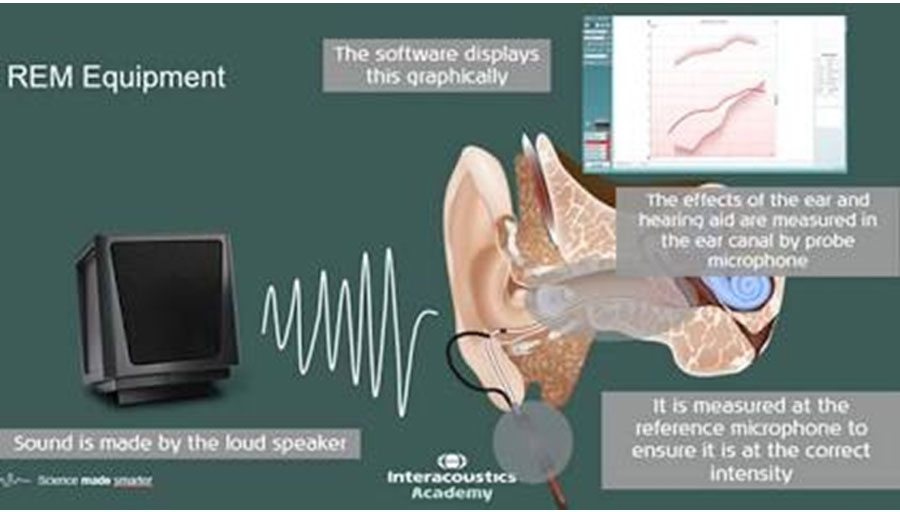
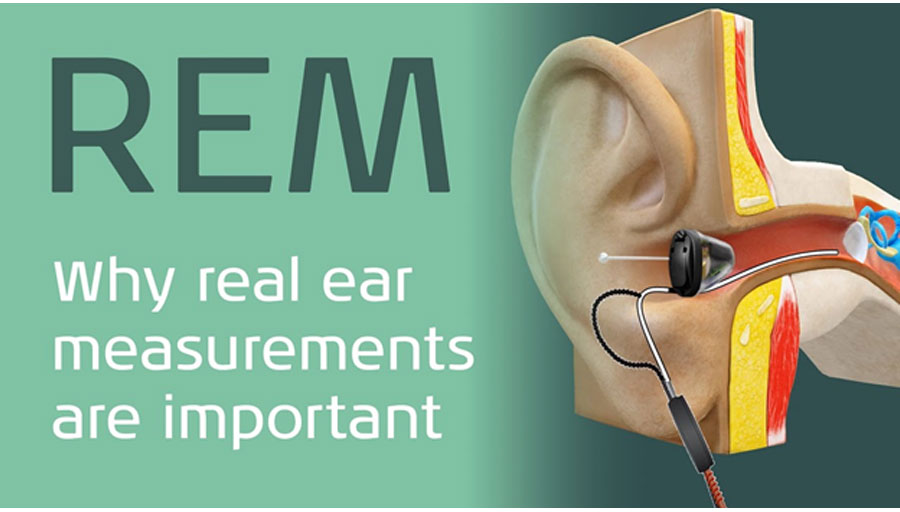
How Real-Ear Measurement captures sound inside the ear. Source: Interacoustics
Imagine buying custom prescription eyeglasses based solely on an estimation of your eye shape, without ever placing them in front of your eyes to verify your vision. That is what happens when hearing aids are programmed using software defaults alone. While modern hearing aid technology is remarkably advanced, hardware represents only 50%. Real-Ear Measurement (REM), or probe-microphone measurement, is a standard that ensures your hearing aids deliver precise amplification needed for your ear.
What Is Real-Ear Measurement (REM)?
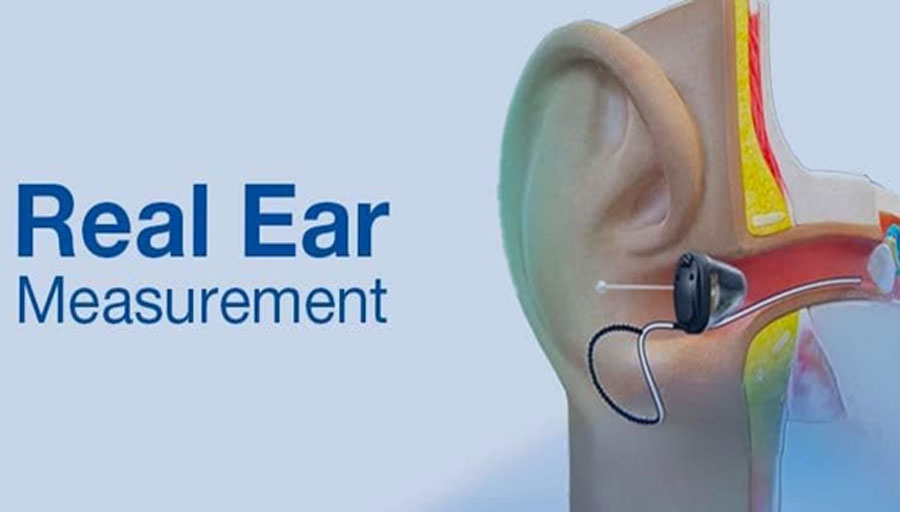
Real-Ear Measurement is an objective verification technique used by audiologists to measure the exact Sound Pressure Level (SPL) hearing aid delivers near tympanic membrane (eardrum). Every human ear canal has a unique shape, volume, length, and natural acoustic resonance. Specific acoustic setting on hearing aid yields completely different sound in a narrow ear canal than on a wide ear canal. REM considers individual anatomical differences by placing a flexible, silicone probe tube inside ear canal to monitor sound in real time.
Key Terms
- REUG (Real-Ear Unaided Gain):- The natural acoustic amplification provided by your unoccluded ear canal.
- REAR (Real-Ear Aided Response):- The total sound pressure level at the eardrum when hearing aid is inserted and turned on.
- Prescriptive Targets (NAL-NL2, DSL v5):- Evidence-based mathematical formulas used to calculate exact gain required across loud, medium, and soft speech frequencies based on your audiogram.
The "Acoustic Leakage" Factor (Domes vs. Custom Molds)
Even if 2 patients have identical audiograms; their acoustic outcome changes dramatically based on their coupling style (vented domes, open domes, or custom ear impressions).
- Open Domes:- Allows low-frequency sounds to bleed out naturally while letting unamplified low frequencies in. REM measures this venting effect so that high frequencies can be boosted without causing acoustic feedback.
- Closed / Power Domes:- Traps sound in the canal to increase bass response, but can drastically amplify the patient's own voice (‘the Occlusion Effect’). REM verifies whether low-frequency gain is unnecessarily high.
- Custom Molds:- Ear mold geometry alters acoustic resonance unpredictably. Without REM verification, first-fit formulas miss targets in custom fittings by up to 10–15 dB in critical high frequencies.
Why REM is considered the "Gold Standard"?
Despite being recognized as clinical best practice by major audiology governing bodies; studies show less than 30% of hearing professionals routinely performs REM for every fitting. Most clinicians rely on "First Fit"; default setting calculated by hearing aid maker's fitting software.
| Feature | Manufacturer "First Fit" Default | Real-Ear Measurement (REM) |
|---|---|---|
| Data Source | Average acoustic estimates based on general populations. | Real-time measurements taken directly inside your ear canal. |
| Anatomical Accuracy | Ignores individual ear canal size, bend, and tissue stiffness. | Accounts for exact ear canal volume and resonance. |
| Speech Clarity | High-frequency consonant sounds are frequently under-amplified. | Matches prescriptive speech targets across all key frequencies. |
| Patient Satisfaction | Higher rate of follow-up visits and device returns. | Significantly higher satisfaction, speech understanding, and retention. |
The Step-by-Step REM Procedure
- Visual Inspection (Otoscopy) - audiologist inspects your ear canal using an otoscope to confirm there is no excessive wax build-up or physical obstruction that could impair probe placement or sound delivery.
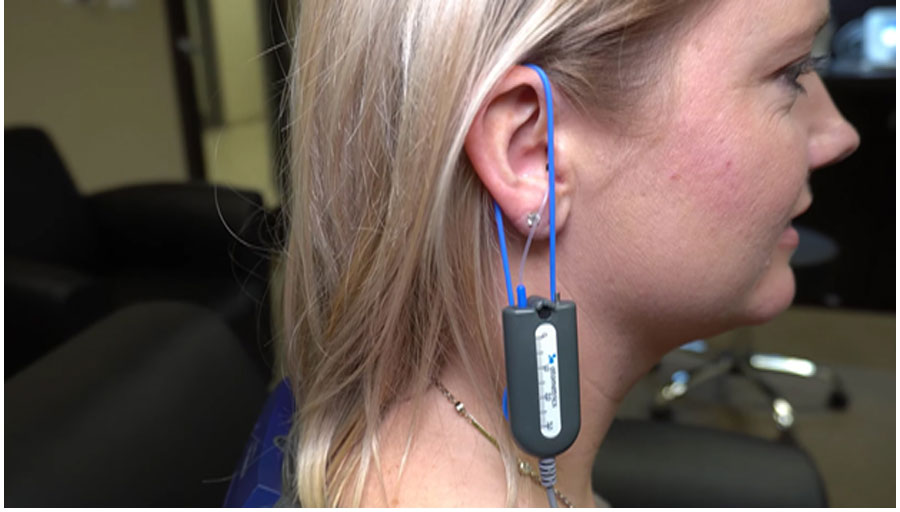
- Probe Tube Insertion - precise placement of probe tube is critical for accurate high-frequency data collection. Under this a soft, ultra-thin silicone probe tube with a silicone marker is guided into the ear canal, stopping within 2 to 6 mm of the eardrum.
- Measure Natural Ear Acoustics (REUG) - a test signal is played as patient is sitting approx. 1 meter from a calibrated loudspeaker. The system records how your open ear naturally shapes sound before amplification.
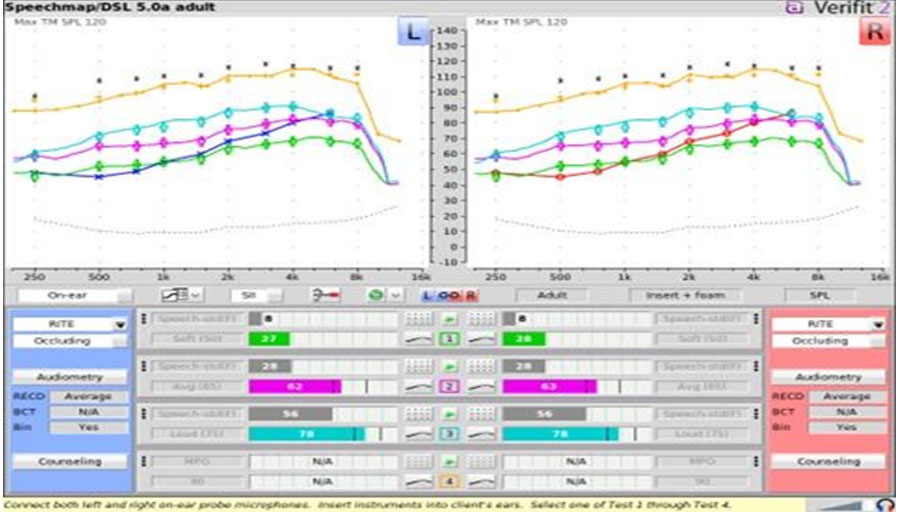
- Aided Verification & Live Speech Mapping - hearing aid is inserted over or beside the probe tube. Calibrated speech signals are played at soft (50 dB SPL), conversational (65 dB SPL), and loud (80 dB SPL) levels.
- Real-Time Fine-Tuning – audiologist adjust hearing aid's gain channels across frequencies in real time until the output response curve visually matches the target curve.
Why Do 70% of Clinics Skip REM?
- Equipment Cost:- High-end REM systems (like Otometrics or Interacoustics) cost anywhere between US$10,000 to US$20,000+ per fitting suite.
- Time Constraints:- A proper REM verification adds 15–25 minutes to an appointment. High-volume, big-box retailers often restrict appointment slots to 30 minutes.
- Over-reliance on Proprietary Software:- Hearing aid manufacturers program their software to display "simulated" ear canal curves. Many audiologists mistake these screen simulations for actual measurements, unaware that simulations ignore real-world ear canal acoustics.
- Training Gaps:- Probe-tube placement requires clinical dexterity within 2–5 mm of the eardrum. Providers without regular training often default to patient-reported feedback ("How does that sound?").
Practical Benefits for Patients
- Superior Speech Intelligibility in Noise:- Consonants like s, f, th, and sh contain essential high-frequency cues. REM ensures these sounds are brought above your hearing threshold without becoming uncomfortable.
- Prevents Over-Amplification:- REM verifies Maximum Power Output (MPO) so that sudden loud noises don’t cause discomfort or acoustic trauma.
- Fewer Follow-Up Adjustments:- Getting the objective acoustics correct on 1st day drastically cuts trial-and-error visits.
- Confidence and Transparency:- Live speech mapping displays your speech spectrum on screen, giving clear visual feedback on how well your hearing aids process speech.
Prescriptive Targets Deep-Dive (NAL-NL2 vs. DSL v5)
| Target Formula | Developed By | Primary Target Audience | Optimization Goal |
|---|---|---|---|
| NAL-NL2 (National Acoustic Laboratories) | Australian Hearing Hub | Adults with acquired Sensorineural Hearing Loss. | Maximizes speech intelligibility while maintaining overall loudness comfort across frequencies. |
| DSL v5 (Desired Sensation Level) | University of Western Ontario | Pediatric patients & severe-to-profound loss. | Maximizes audibility through widest bandwidth to support language and speech acquisition. |
Key takeaway for patients: A qualified audiologist selects the best formula suited to your lifestyle, cognitive, and hearing profile. Only REM can confirm a hearing aid is actually hitting those exact curves inside your ear canal.
Questions to Ask Your Audiologist Before Buying Hearing Aid
- "Do you perform Real-Ear Measurements on every initial fitting and fine-tuning?"
- "Will you show me my Live Speech Mapping targets on screen during the fitting?"
- "Which prescriptive fitting formula (e.g., NAL-NL2) are we targeting for my hearing profile?"
- "If I switch to a different dome size or custom ear mold, will we re-verify with REM?"
- "Can I get a printed or digital copy of my REM verification curves for my medical records?"
AudiZone Speech & Hearing Clinic with its pan India presence through 16 branches and a team of over 100 highly qualified audiologists has till date successfully treated over 1 lakhs patient’s including kids and adults for hearing and speech related issues. AudiZone provides various types of branded hearing aids such as Signia, Phonak, Widex, ReSound, Starkey, and Oticon to patients based on their preference and requirement.