Do Hearing Aids Restore Full Hearing Ability? An Explanation
If you or a loved one is dealing with hearing loss, a fundamental question often arises; will getting hearing aids bring back normal hearing? The short answer is no. Hearing aids do not restore full natural hearing, nor can they cure underlying auditory damage. However, looking at hearing aids purely as a "cure" misses the point of what the devices actually achieve. While they don't reverse damage, modern hearing aids can transform how you communicate, protect your long-term cognitive health, and significantly improve your overall quality of life
The Biological Reason: Why Hearing Loss Can't Simply Be "Fixed"
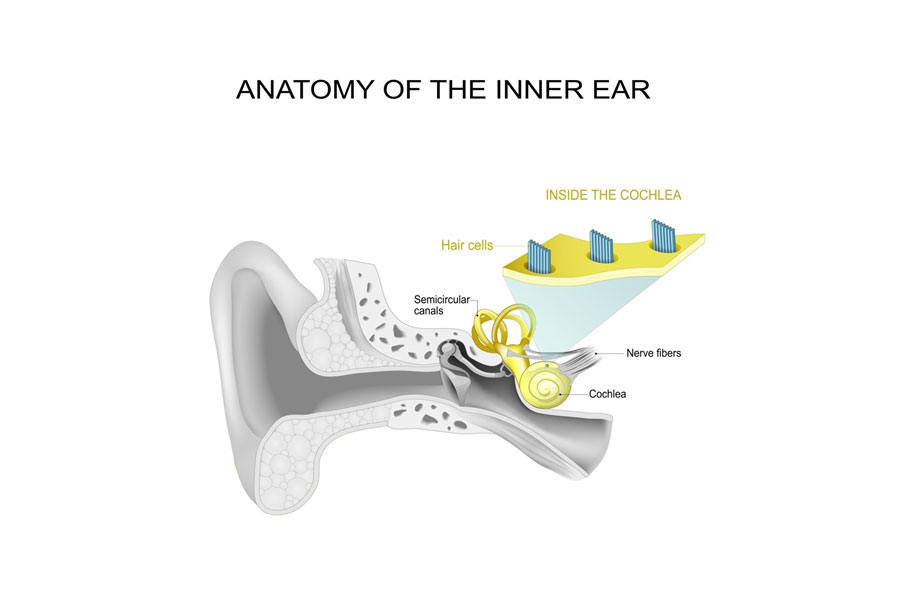
To understand why hearing aids can't fully restore natural hearing, know how hearing loss occurs in the first place. The vast majority of adults with hearing loss suffer from sensorineural hearing loss. This occurs when tiny, delicate hair cells (stereocilia) inside the inner ear (cochlea) become damaged due to:
- Natural aging (presbycusis)
- Prolonged exposure to loud noise
- Certain medications or medical conditions
Inside the cochlea are 15,000 microscopic hair cells (stereocilia). Hair cells at the base of the cochlea detect high frequencies (like female voices or consonant sounds), while cells at the apex detect low frequencies (like a bass drum). In humans, once these hair cells are damaged or dead, they do not regrow or repair themselves.
Intact, they act as precise translators, converting specific sound frequencies into electrical impulses for the brain. When damaged, they don't just reduce the volume of sounds; they also degrade clarity and precision of signals sent to the brain.
Eyeglasses vs. Hearing Aids: A Common Misconception
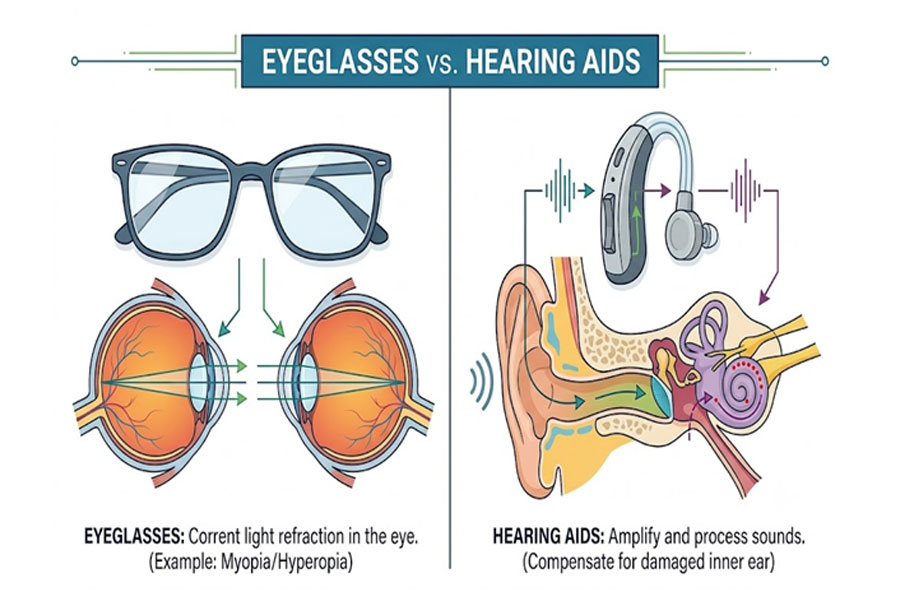
People often assume hearing aids work similar to prescription eyeglasses.
| Feature | Eyeglasses | Hearing Aids |
|---|---|---|
| Primary Mechanism | Refracts light through intact neural pathways (retina/optic nerve) | Amplifies sound signals sent through partially damaged neural pathways |
| Correction Level | Often restores 20/20 visual acuity completely | Restores sound accessibility, but cannot fix damaged inner ear cells |
| Brain Adaptation | Immediate visual clarity upon putting them on | Requires an adjustment period (neuroplastic retrain) |
When you put on glasses, light is redirected so your eye focuses correctly. With hearing aids, sound is amplified and processed digitally, but it still passes through damaged auditory machinery to reach the brain.
How Modern Hearing Aids Actually Work
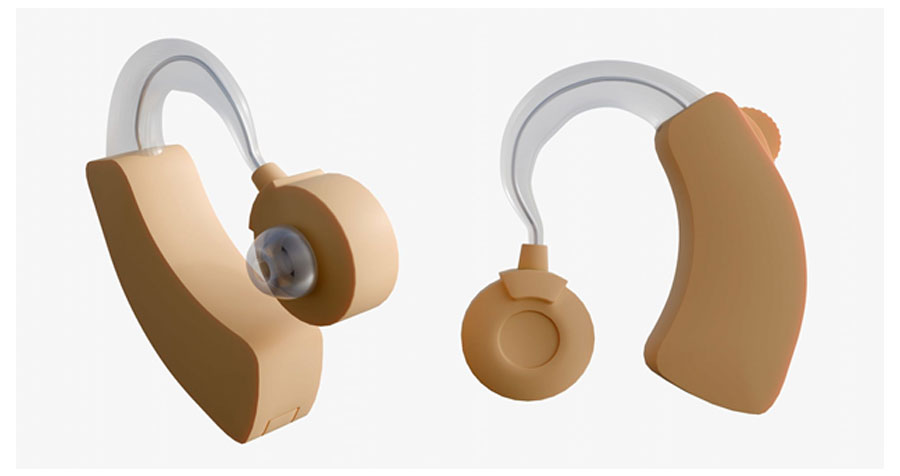
Instead of restoring lost biological function, modern hearing aids act as sophisticated electronic bridges
- Microphones capture environmental audio
- Digital Signal Processors (DSP) analyze the sound in real-time, separating human speech frequencies from unwanted background noise
- Amplifiers boost the soft frequencies you can no longer hear naturally
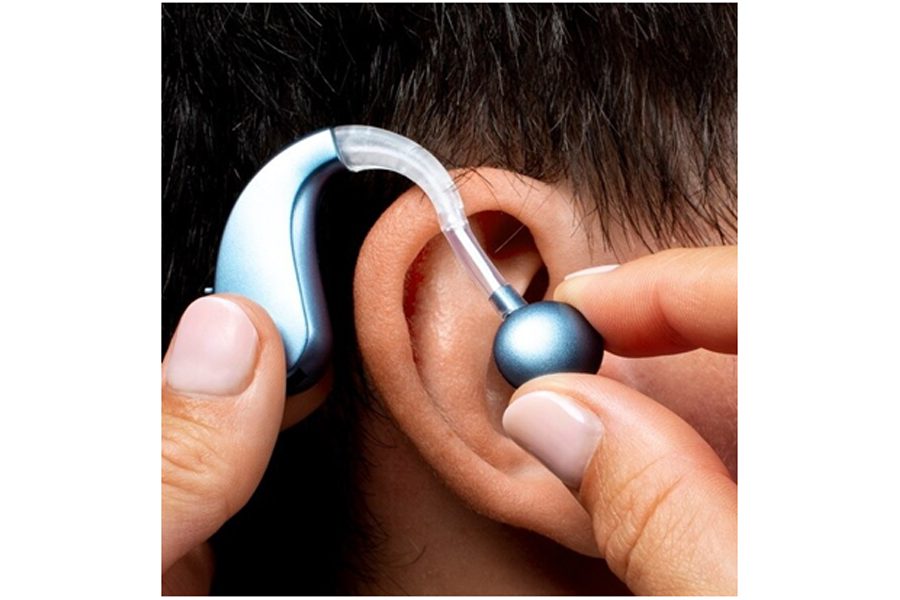
- Speakers (Receivers) send the tuned audio directly into your ear canal
Some advanced devices also feature directional microphones, Bluetooth streaming, wind noise reduction, and AI-driven speech isolation to help you focus on conversations in crowded rooms.
Realistic Expectations
a. What Hearing Aids CAN Do
- Make Speech Clearer: Boost high-pitched consonants (f, s, th, t) that often fade first, making words distinguishable again
- Reduce Background Strain: Modern algorithms attenuate ambient sound so your brain doesn't have to work as hard in noisy environments
- Protect Cognitive Health: Untreated hearing loss forces the brain to spend immense energy decoding sound, increasing fatigue and cognitive strain. Hearing aids feed the brain's auditory cortex, keeping neural pathways active
- Help Manage Tinnitus: Amplifying ambient sounds often masks the phantom ringing or buzzing associated with tinnitus
b. What Hearing Aids CAN’T Do
- Restore "Normal" Ear Function: Hearing aids can't replace damaged hair cells or repair auditory nerve
- Provide 100% Noise Isolation: In extremely noisy places, even normal-hearing individuals struggle. Hearing aids won't eliminate all background clutter
- Work Instantly Without Adaptation: When you wear hearing aids, your voice may sound echoed ("occlusion effect"), and environmental sounds may feel unnaturally sharp. It takes 2 to 8 weeks for the brain to adapt to sound processing again
Why Getting Fitted Matters More Than the Brand
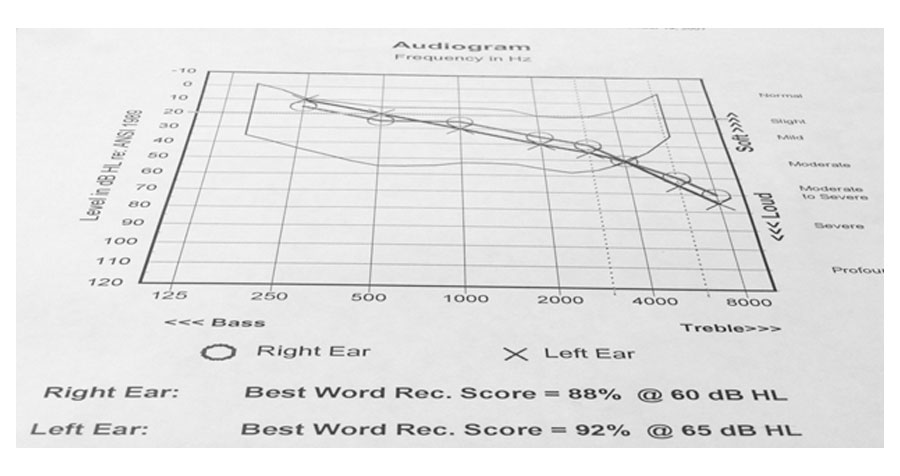
Because hearing aids are not a plug-and-play cure, professional fitting and tuning are critical. An audiologist or performs an audiogram to measure hearing thresholds across frequencies. They program the hearing aid using Real-Ear Measurements (REM) to match your ear's exact physical acoustics and specific loss profile. While hearing aids do not restore full natural hearing, they are effective at bridging the gap between impaired hearing and functional clarity.
- Volume vs. Clarity:- Making a sound louder through a hearing aid helps remaining, partially damaged hair cells detect input.
- The Distortion Problem:- Amplifying sound through dead or severely damaged regions of the cochlea is like turning up the volume on a blown speaker. The signal reaches the brain, but it remains distorted as the physical transducer in ear is permanently degraded.
2. The Auditory Cortex & Auditory Deprivation
Hearing isn't just an ear function—we hear with our brains. The ear is simply the sensor; the auditory cortex in the brain processes, decodes, and interprets the signals.
If hearing loss goes untreated for long, the brain's auditory cortex receives fewer signals and begins to reassign its resources to other senses. This is known as cross-modal neuroplasticity. When a hearing aid finally delivers sound signals again, the brain goes through a lengthy "re-learning" phase to recognize those sounds.
Cognitive Load and Listening Effort
Even with hearing aids, listening requires conscious cognitive effort. A person with normal hearing automatically filters out a background air conditioner to focus on a speech stream. A person wearing hearing aids must use active mental energy to separate speech from noise, leading to listening fatigue.
3. Technical Challenges of Modern Hearing Aids?
| Technical Challenges | How Modern Hearing Aids Address It |
|---|---|
| The "Cocktail Party" Problem | Deep Neural Networks (DNN): Modern processors analyze acoustic environments hundreds of times per second, isolating speech patterns from complex background noise |
| Sound Localization | Binaural Beamforming: Dual-microphones on both ears communicate wirelessly with each other to mimic how the human head naturally pinpoints where a sound originates |
| High-Frequency Loss | Frequency Lowering / Transposition: If high-frequency hair cells are completely dead, devices shift those high-pitched sounds into lower, healthier frequency bands the ear can still process |
| Environmental Switching | AI Scene Classification: Algorithms dynamically adapt volume and directional settings when walking from a quiet bedroom into a noisy restaurant |
4. Prescriptive Fitting: Why "One Size Fits None"
Because every individual's pattern of hair cell loss is unique, so a hearing aid must be customized accordingly:-
- Audiogram Mapping:- Tests map exact decibel loss across frequencies (typically $250\text{ Hz}$ to $8000\text{ Hz}$).
- Real-Ear Measurement (REM):- A tiny microphone is inserted into the ear canal alongside the hearing aid to measure the actual acoustic resonance inside the user's specific ear shape.
- Dynamic Range Compression:- Hearing aids do not amplify all sounds equally. Soft sounds are boosted significantly, medium sounds moderately, and already-loud sounds are compressed so they don't cause pain or further ear damage.
People wear hearing aids expect restoration of audibility and improved speech understanding; but it’s not a 100% fix. You will still experience occasional difficulty in high-noise environments, like loud restaurants or family gatherings with multiple overlapping speakers.
AudiZone Speech & HearingClinic with its pan India presence through 16 branches and a team of over 100 highly qualified audiologists has till date successfully treated over 1 lakhs patient’s including kids and adults for hearing and speech related issues. AudiZone provides various types of branded hearing aids such as Signia, Phonak, Widex, ReSound, Starkey, and Oticon to patients based on their preference and requirement.