Since the opening up of the Indian economy in 1991, airplane travelling has increased in leaps and bounces. There have been numerous airline companies ever since who have launched airline services with hundreds of passenger planes of various sizes. This has resulted in increase in number of airline passengers from few hundreds a day to several thousands’ per day today. Many people are travelling several times in a year as frequent flyers. As the number of airline passenger is set to grow further, there are several issues airline airplane passengers face while flying, and Airplane Ear is one of them.
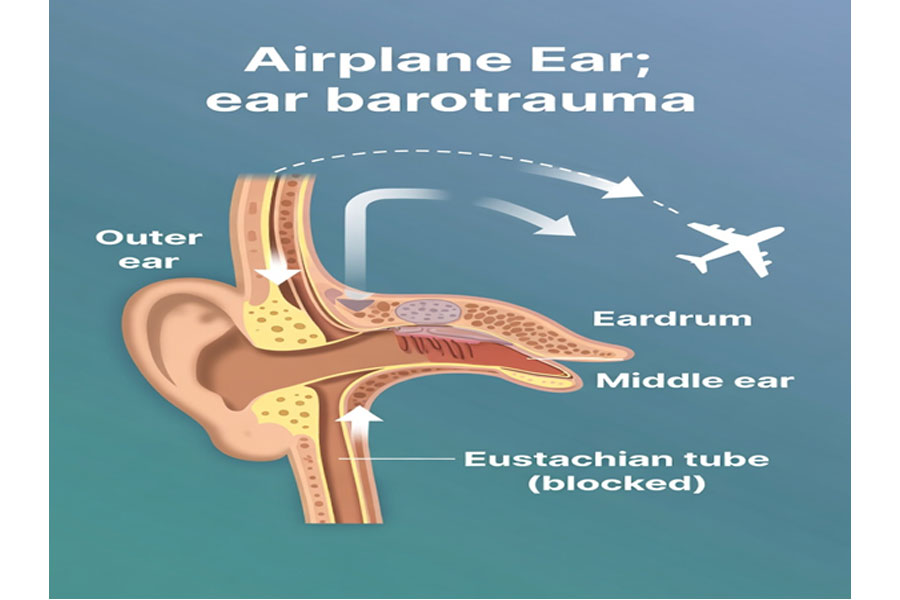
If you have ever felt a painful pressure, fullness, or “popping” in your ears during a flight — especially while taking off or landing — you have experienced airplane ear, also known as ear barotrauma or aerotitis media/ barotitis media. It’s incredibly common and usually harmless problem, but it can be uncomfortable or even scary for frequent flyers. So, what causes airplane ear, how to prevent and treat it.
What Causes Airplane Ear?
Airplane ear happens due to a rapid imbalance in air pressure between your middle ear and the cabin pressure. Your middle ear is connected to the back of your nose and throat by a narrow tube called the Eustachian Tube. This tube’s job is to equalize pressure on both sides of your eardrum so it can vibrate properly for hearing.
During flights:-
- Takeoff (ascent) → Cabin pressure decreases → Air needs to leave the middle ear.
- Landing (descent) → Cabin pressure increases → Air needs to enter the middle ear.
If the Eustachian tube doesn’t open quickly enough (due to swelling, congestion, or its natural narrowness), the eardrum can get stretched or retracted, causing pain and other symptoms.
Risk factors that make airplane ear worse:-
- Cold, sinus infections, or allergies (congestion blocks the tube).
- Recent ear infections.
- Narrow Eustachian tubes (more common in babies and young children).
- Smoking or conditions that affect the nose/throat.
Common Symptoms
Most people experience mild symptoms in one or both ears:-
- Feeling of fullness or stuffiness
- Muffled hearing or slight hearing loss
- Discomfort or popping/clicking sensations
- Mild ear pain
Severe symptoms are less common, but they do occur:-
- Intense ear pain
- Significant temporary hearing loss
- Ringing in the ears (tinnitus)
- Dizziness or vertigo
- Rarely Airplane Ear can lead to ruptured eardrum with fluid or blood drainage.
Usually, these symptoms are worst during descent (landing).

How to Prevent Airplane Ear
Prevention is the best strategy. Start before the flight:-
- 1. Stay ahead of congestion — Use a saline nasal spray or rinse a few days before boarding a flight. If congested, consider a decongestant nasal spray or oral decongestant about 30–60 minutes before flight takeoff and landing. Don’t forget to check with your doctor first, especially if you have high blood pressure.
- 2. Equalize pressure actively:-
1. Yawn and swallow frequently
2. Chew gum or suck on hard candy
3. Drink water regularly - 3. Try the Valsalva maneuver → Pinch your nostrils shut, close your mouth, and gently blow as if blowing your nose. Do it softly — repeat it during ascent and especially descent.
- 4. Toynbee maneuver → Pinch nose and swallow at the same time.
- 5. Special earplugs — Pressure-regulating earplugs such as Mack’s Flightguard or Alpine FlyFit have filters that slowdown changes in pressure and may help some people.
- 6. For babies and toddlers — Give them a bottle, pacifier, or breastfeed them during takeoff and landing.
- 7. Don’t ever sleep during takeoff and landing, as you won’t be able to equalize pressure.
If you have a bad cold or sinus infection, consider delaying your flight if possible.
Treatment: How to Relieve Airplane Ear
In most cases, airplane ear resolves on its own within a few hours to a couple of days once the ear pressure equalizes. Some DIY home remedies and self-care that can help :-
- Continue yawning, swallowing, and performing the Valsalva/Toynbee maneuvers after landing.
- Take over-the-counter medicines like acetaminophen or ibuprofen.
- Use decongestants or nasal sprays.
- Stay hydrated and takes ample rest.
If DIY home remedies and self-care don’t give you the desired relief, it’s better to seek medical treatment.
- The doctor may prescribe stronger decongestants, nasal steroids, or even antibiotics if a middle ear infection develops.
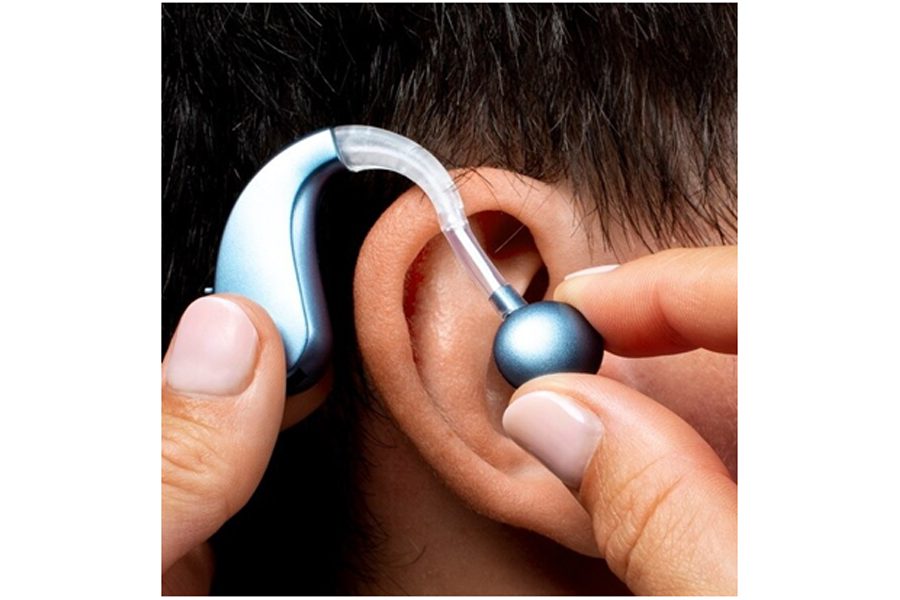
Does Airplane Ear Require a Hearing Aid?
Almost never. Airplane ear typically causes temporary conductive hearing loss due to ear pressure and possible fluid behind the eardrum. Once pressure normalizes and any fluid drains, hearing returns to normal in majority of flyers.
Permanent hearing loss is very rare and usually occurs in extreme cases involving eardrum rupture with inner ear damage or repeated severe barotrauma. Even then, a hearing aid is not a solution, treatment must focus on healing underlying damage. If your hearing remains muffled or reduced for more than a few days after a flight, better consult an ENT doctor or audiologist for evaluation. But routine airplane ear does not lead to you needing hearing aids.
When to See a Doctor
- Pain or fullness lasts for a few days after flight
- You have severe pain, significant hearing loss, vertigo, or ringing that doesn’t improve.
- Fluid or blood drains from your ear.
- Symptoms like fever or signs of infection.
Airplane ear is an annoying problem but almost always preventable and temporary. Using simple techniques like chewing gum, staying hydrated, and actively equalizing pressure, most people can fly comfortably. If you still suffer from airplane ear despite trying these tips, consult an ENT specialist to check for underlying Eustachian tube dysfunction.
AudiZone Speech & Hearing Clinic with its pan India presence through 15 branches and a team of over 100 highly qualified audiologists who have till date successfully treated over 1 lakhs patient’s including kids and adults; providing branded hearing aids such as Signia, Phonak, Widex, ReSound, Starkey, and Oticon based on their preference and requirement.